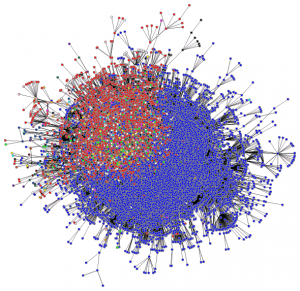
To be, or not to be, that is the debate map
A light-hearted debate map of Hamlet’s existential dilemma in Act III Scene I, to commemorate the 444th anniversary of William Shakespeare’s birth on 23 April 1564.
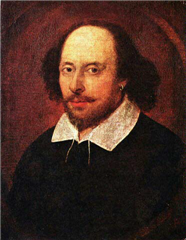
Without further ado, here’s the soliloquy—the medium in which sensitive young men worked out their feelings pre-YouTube:
“To be, or not to be, that is the question;
Whether ’tis nobler in the mind to suffer
The Slings and Arrows of outrageous Fortune
Or to take arms against a sea of troubles,
And by opposing, end them. To die, to sleep;
No more; and by a sleep to say we end
The heart-ache and the thousand natural shocks
That flesh is heir to — ’tis a consummation
Devoutly to be wish’d. To die, to sleep;
To sleep, perchance to dream. Ay, there’s the rub,
For in that sleep of death what dreams may come,
When we have shuffled off this mortal coil,
Must give us pause. There’s the respect
That makes calamity of so long life,
For who would bear the whips and scorns of time,
Th’oppressor’s wrong, the proud man’s contumely,
The pangs of dispriz’d love, the law’s delay,
The insolence of office, and the spurns
That patient merit of th’unworthy takes,
When he himself might his quietus make
With a bare bodkin? who would fardels bear,
To grunt and sweat under a weary life,
But that the dread of something after death,
The undiscovered country from whose bourn
No traveller returns, puzzles the will,
And makes us rather bear those ills we have
Than fly to others that we know not of?”
…and here’s the map of Hamlet’s internal struggle (complete with the embed code for his MySpace blog):
So, how do you rate Hamlet’s arguments—does the proud man’s contumely really sting more than the pangs of dispriz’d love? Either way, I guess Valleywag has the story covered—and, at the risk of a skewed sample, what do you make of Hamlet’s conclusion?
“Thus conscience does make cowards of us all,
And thus the native hue of resolution
Is sicklied o’er with the pale cast of thought,
And enterprises of great pitch and moment
With this regard their currents turn away,
And lose the name of action.”
Don’t think about thinking. It’s not on the test…
A double thank you to Dan Pink (and Mike Sporer) today, for introducing me to Tom Chapin’s guitar-based critique of trends in modern education policy:
Obviously Tom’s closing observations about the importance of teaching of students how to think and engage in rational discourse strike a chord here. And our belief in the potential multiplier gains to society from helping children to develop their thinking skills explicitly rather than implicitly, has been one of our primary motivations in making Debategraph freely available to schools and colleges as an open education resource.
Viewed as a whole, though, what do you think of points Tom’s making? What are the other issues and voices in the debate?
I have embedded a rough starting point for the debate map below, using the arguments presented on Tom’s Not On the Test site, and would welcome input from teachers, students and educational policy specialists to help develop the map into a comprehensive overview of this vital debate.
Changing Climate: live blogging the Progressive Governance summit
Congratulations (and a relaxing Sunday) to Simon Dickson and the Downing Street digital team, for their phenomenal work on Policy Network’s Progressive Governance summit this morning.
At short notice, they produced an impressive and engaging microsite built around a live video stream, live blogging and comments, and immediate access to the summit papers. It was a perfect illustration of how lightweight web technology can transform the public experience of political gatherings of this kind; simultaneously demystifying proceedings and adding new layers of understanding—both about the content of the summit and, as Ellee Seymour notes, about the participants.
It was a courageous decision by all concerned to innovate rapidly in this fashion; a decision fully justified by the outcome. More soon, please.

The summit—which drew together Michelle Bachelet Jeria, Helen Clark, Bill Clinton, Kemal Dervis, Robert Fico, Alfred Gusenbauer, Antonio Guterres, Ellen Johnson Sirleaf, Donald Kaberuka, Gediminas Kirkilas, John Agyekum Kufuor, Pascal Lamy, Peter Mandelson, Thabo Mbeki, Romano Prodi, Kevin Rudd, Javier Solana, Jens Stoltenberg, and Dominque Strauss-Kahn, as well as Gordon Brown—focused on globalisation, development, international institutions, and climate change, with practical calls to action on each theme summarised in the final communiqué.
I followed the session on climate change, and the accompanying paper by Nicholas Stern and Laurence Tubiana, Director-General of (IDDRI), with particular interest in the context of the climate change debate map that Debategraph is developing in collaboration with Mark Klein at the MIT Center for Collective Intelligence. Watch this space too, for emerging details of a broader international collaborative initiative on climate change deliberation.
Our early work in progress on the climate change map is embedded below, and we expect the map to move to a fully mature and comprehensive analysis of the global policy debate by the summer.
Anyone interested in participating in this process is welcome to contact us via email at david [at] debategraph [dot] org.
Joining the Open Education Revolution
Following our adoption of the Creative Commons Attribution-Share Alike license, I am delighted to report that Debategraph has signed the Cape Town Open Education Declaration.
The Declaration, discussed here by Jimmy Wales and Richard Baraniuk, launched in January this year with the support of the Open Society Institute and the Shuttleworth Foundation.
The full text of the Declaration begins:
“We are on the cusp of a global revolution in teaching and learning. Educators worldwide are developing a vast pool of educational resources on the Internet, open and free for all to use. These educators are creating a world where each and every person on earth can access and contribute to the sum of all human knowledge. They are also planting the seeds of a new pedagogy where educators and learners create, shape and evolve knowledge together, deepening their skills and understanding as they go.
This emerging open education movement combines the established tradition of sharing good ideas with fellow educators and the collaborative, interactive culture of the Internet. It is built on the belief that everyone should have the freedom to use, customize, improve and redistribute educational resources without constraint. Educators, learners and others who share this belief are gathering together as part of a worldwide effort to make education both more accessible and more effective.”
And, via David Wiley, Mark Shuttleworth offers the following video introduction:
With historic forms of education in kaleidoscopic flux, it’s a remarkable and inspiring time to be alive. And, as the range and depth of the Creative Commons licensed debate maps mature, Debategraph is committed to making a novel and substantive contribution to this revolutionary movement.
From Debatemapper to the Debategraph…
An exciting time for us, with long-planned changes now live on the site—and the culmination of our first developmental phase, which began last summer with the pilot projects for the UK Prime Minister’s Office and the Royal Society for Arts.
The changes highlight both our social purpose—of building a global repository of public debate that’s freely available for all to see and for all to improve—and our vision of mapping not just individual debates but the cumulative graph of semantically interrelated debates.
There’s much for future discussion, but for now the main points are:
(1) A new name and URL to embody our public ethos and intent: www.debategraph.org.

(2) The adoption of the Creative Commons Attribution-Share Alike license—the Creative Commons license closest in spirit to the Wikipedia GFDL license—for all material posted to the site henceforth. The license is the emerging standard for mass collaboration projects of this kind; as signalled by the recent announcements from Creative Commons, Wikipedia and Citizendium.
![]()
(3) The capability to interrelate and navigate through a cloud of semantically related debates—to see more clearly how debates shape, and are shaped by, each other—is now fully enabled within Debategraph.
![]()
Lots accomplished: and, as ever, lots still to do; with all feedback welcomed wholeheartedly.
…and come and join us at the start of a great adventure.
Can computers think? Mapping the great debates
We stand on the shoulders of giants…
“…so that we can see more than they, and things at a greater distance, not by virtue of any sharpness of sight on our part, or any physical distinction, but because we are carried high and raised up by their giant size.”
Robert Horn is one of my giants.
Twenty years ago, Bob looked at humanity’s troubled progress through the increasingly complex maze of philosophical, scientific, technological and political debate and realised that we needed maps.
But what kind of maps? What would they look like? What form would they take?
The way to figure this out, Bob reasoned, was to experiment with an extraordinarily complex debate. And he picked a spectacular one: the debate raging across philosophy, cognitive science, mathematics, neurobiology and computer science around the deceptively simple question “can computers think?”. A debate Alan Turing catalysed with his assertion in 1950 that by 2000:
“one will be able to speak of machines thinking without expecting to be contradicted.”
As with Orwell’s 1984, Turing’s date lies behind us now, but the issue has never been more salient for society.
Starting alone, and then with a team of researchers at Stanford, Bob devoured the relevant literature; distilling millions of words into the underlying arguments and iterating through multiple methods of presentation to develop a semantically rich and easy to navigate visual form.
The project culminated, in 1999, with the publication of seven remarkable 3’ x 4’ paper-based maps, encompassing more than 800 arguments advanced by over 300 of the finest minds of our generation, including: Alan Turing, John Searle, John Lucas, Herbert Simon, Douglas Hofstadter, Marvin Minsky, Daniel Dennett, Roger Penrose, Hilary Putnam, Stephen Kosslyn, Zenon Pylyshyn, James McClelland, Hubert Dreyfus, Ned Block, James Moor, Jack Copeland, Selmer Bringsjord, David Rumelhart, David Chalmers, and George Lakoff.
Robert Horn’s Can Computers Think? maps

(copies of the maps can be ordered here)
The set of maps is a masterpiece and an extraordinary gift to humanity; allowing anyone to gain a deep understanding of the structure and content of fifty years of intricate debate after a few hours of study rather than years of research. And it exemplifies the potential for maps of this kind to open other domains of debate and knowledge to general understanding.
At the time of publication, Robert Jacobson hailed Bob as “the new Mercator, a pioneering navigator of knowledge”—and, for anyone who has spent time with the set of maps, it easy to imagine that history will view its creation as a significant turning point in the advancement of human learning.
However, for all its astonishing brilliance, the set of maps also speaks to the challenges that remain in the field:
- The maps exist because of the Herculean endeavour of a small team of people over many years.
- The territory, unlike the maps, continues to evolve.
- The maps have physical boundaries, beyond which lie uncharted territory.
So what next?
What if you could lift Bob’s map off the page and recreate it online with all the arguments open to collaborative editing and evaluation by many people rather than a few; make the structure of the map fluid so that the debate can evolve as new arguments and evidence emerge; and allow related maps to interconnect so that, in principle, there is no limit to the territory that can be covered?
With Bob’s blessing, I am delighted to announce today that this is what we have done.
The top layer of the debate map is shown below: to open and explore the full map click on the View live button.
The translation will continue over the coming days, with more images and cross-relationships to add; however, the essence of the map is in place now and open to extension by anyone with an interest in the field.
If you would like to participate in this process, or the formal launch event next year, register online or contact me via the e-mail address above.
There’s more to discuss in future posts, including: the translation process, the expansion of the mapping approach to other fields, and the importance of the Can Computers Think? debate itself.
For now though, I’ll leave you with Bob’s map—and the view it affords from many tall shoulders.
Rethinking Drugs Policy
Following the publication of the report by the RSA Commission on Illegal Drugs, Communities and Public Policy earlier this year, the Debatemapper team worked with the RSA to create a debate map of the case made in the report for rethinking UK drugs policy.
The map decomposes the report’s arguments into constituent elements, each of which is open to further refinement, challenge, comment and evaluation. You can see the top level structure of the map in the debate strand below.
The Commission’s report is intended to feed into the UK Government’s 2008 review of the National Drugs Strategy; for which a formal public consultation process is underway. You can read more about the RSA’s other initiatives in this context here.
The debate map is now open to editing, comment and evaluation by anyone with an interest in the drugs policy field, and we hope that over time a community of experts will form around the map to cultivate it as a permanent resource for drugs policy stakeholders in the UK and beyond.
With the wider international debate in mind – and to illustrate how Debatemapper can be used to build clusters of interrelated maps – we have also created a new map from an existing strand of the RSA debate map, which explores the arguments for and against the legalisation of drugs.
The top-level arguments are shown in the strand below. Like a wiki, the debate map is inherently provisional and open to further refinement. So if you spot any gaps or weaknesses in the arguments or if you have any new lines of thought or evidence to contribute, please feel free to sign in and start editing and evaluating the map straightaway. Video and text help is available directly from the map.